
“Oh, Susan. You’ve never been to the Spy Museum? You should go,” someone told me recently.
Later, I related the conversation to my friend Martina, and she said, “I’ve never been there either! Let’s go, I’ll drive!”
So last Saturday was the chosen day for Martina and I to visit the International Spy Museum in Washington, D.C.
I get to Washington D.C. about every three years or so, and there’s always so much to see, especially for people like Martina and I, interested in news and history. I love the Bible museum, the cherry trees, and the Greco-Roman architecture.
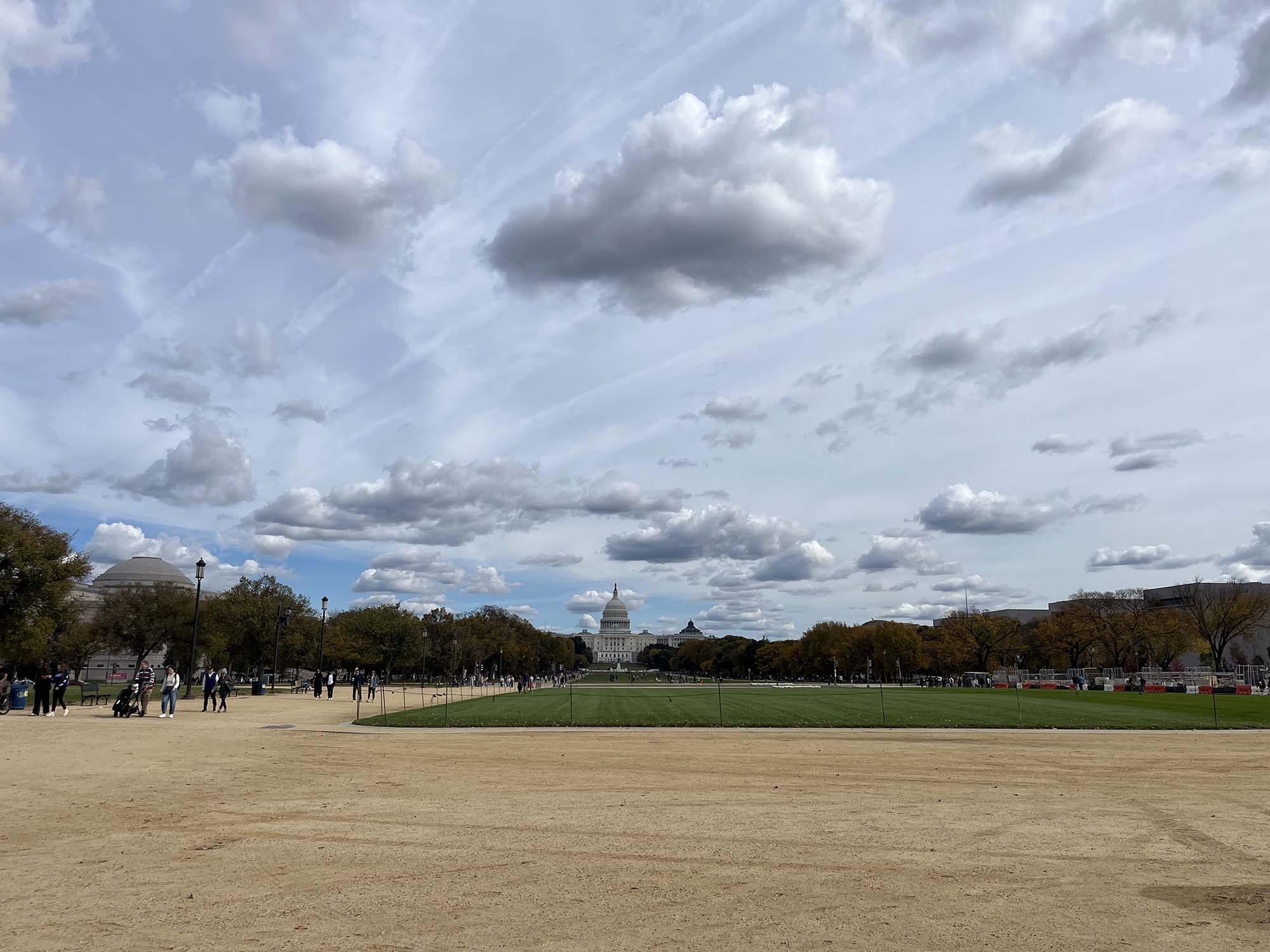
When we got to the Spy Museum in late morning, the next available admission was 1:45 p.m., so we set off to explore the Washington Mall. We had beautiful weather for October.
Due to the current federal government shutdown, museums like the Smithsonian were closed. The Spy Museum is privately owned and is not affected.

The National Mall in Washington is like a huge park with the Capitol Building at one end and the Lincoln Memorial at the other. We walked toward Washington Monument, which is about one-third of the way between the Lincoln Memorial and the Capitol.
Just southeast of the White House, we climbed the steps to the General Sherman monument to see where the East Wing has been torn out. We could see part of the gap in the side of the main building and heard construction.
A few blocks north, hungry after the long drive and so much walking, we ate lunch at an Afghan restaurant called the Grill Kabob.

As we dug in the rice and naan, we noticed four National Guardsmen marching past the restaurant window, one of several troops we saw that day. Keeping the city safe or just political posturing? Who knows?
“Let’s walk back to the museum by way of 10th street,” I suggested, scrolling Google Maps. “Then we can see Ford’s Theater.”

We stopped to take a few pictures of the building where Lincoln was shot. I don’t think I ever realized how close the theater had been to the White House.

At 1:45 p.m., we lined up on the red carpet with all the other ticket-holders, then rode the elevators to the top of the building. The International Spy Museum follows the history and methods of espionage from ancient times to the recent past. There’s interactive computer displays and the museum is kid-friendly and non-partisan.
Governments have always found ways to spy on their enemies and citizens, and the museum displays contained plenty of examples. Centuries ago in Paris, the monarchy had a special letter-opening unit, where the post took a secret detour to a location where “agents” skilled in different languages would carefully open letters, read them, copy anything suspicious, and carefully reapply the sealing wax.
And of course, dissenters use secret methods too. During the American Revolution, a New York woman named Anna Strong signaled to her fellow Patriot (watching with a spyglass from a boat in a nearby cove) by hanging a black petticoat and white hankies on her laundry line.
Neither Martina or I had ever had heard that story before.
Many exhibits focus on the Cold War— it was the golden age of spying, with the US and Russia, East and West Germany, all battling it out with secret agents in the field. Cyber espionage is the norm now, less wigs and less risk of death, but who knows how it will all turn out?
The museum also had a few amusing (to me) displays about trade secrets being stolen. Apparently foreign companies have tried to steal our secrets to bioengineered corn and titanium dioxide, which whitens toothpaste, paper, plastic forks, and the filling in Oreo cookies.
“Well, I got my money’s worth,” Martina said as we walked out of the museum and toward the parking garage. Soon we were on the Beltway, driving back toward Lancaster County and our boring and peaceful lives.
Intrigue, spies and secrets, political shenanigans— there’s nothing like a visit to the Spy Museum to remind you that there’s nothing new under the sun.
Interesting how spying changed since the Cold War.
Something else I wish would change is Daylight Savings Time! Since we aren’t saving coal or candles anymore by turning clocks forward one hour in spring and back one hour tonight, why not end this era?
Well, I enjoyed my extra hour this morning! But you’re right, in some ways Daylight Savings Time seems as outdated as the Cold War spying techniques.
Thanks for commenting!